01
Skiing
One of my favourite ways to enjoy the Swiss mountains and spend time outdoors in winter.
02 / Interests
From the classroom to the mountains and football pitch, these are the things I enjoy now—and a few directions I want to explore.
One of my favourite ways to enjoy the Swiss mountains and spend time outdoors in winter.
I enjoy the energy of the game, being part of a team, and always having something to improve.
I like the challenge of working through a problem and the satisfaction of finding the answer.
Practical experiments make ideas real and help me understand how things work.
I enjoy discovering how people, ideas, and events have shaped the world we live in today.
Building a small submarine and soldering components at camp made me curious to learn more.
Football highlight
Football is more than a sport I play. I enjoy it enough that I travelled to experience the World Cup in person—an atmosphere I will always remember.
The full story
My trip to Canada began simply as a family vacation.
There was no elaborate plan behind it, and I certainly did not expect the journey to connect so closely with another important chapter of my life. But shortly after arriving in Canada, we happened to be there for the World Cup match between Switzerland and Colombia.
Having spent years studying in Switzerland, the opportunity to watch the Swiss national team play in Canada immediately made the match feel personal.
Over the years, Switzerland had gradually become familiar to me through its cities, culture, routines, and everyday life. When you live somewhere for long enough, many of those things begin to feel ordinary.
It was only when I found myself thousands of kilometers away, watching Switzerland compete on the World Cup stage in Canada, that I realized how deeply the country had become part of my own story.
The match itself was incredibly tense.
Neither side managed to score during regulation or extra time, leaving the game tied at 0–0 and forcing the result to be decided by a penalty shootout.
Of all the moments that evening, the one I remember most clearly was the final penalty.
As Ruben Vargas walked toward the penalty spot, it felt as though the entire outcome of the match had been compressed into a few seconds.
Technical ability matters in a moment like that, of course. But what stayed with me even more was the willingness to step forward under enormous pressure and accept responsibility for what came next.
He took his run-up.
He struck the ball.
And it went in.
The stadium erupted.
Around the world
Every place has shown me something different. Click a country to see its name, or drag the globe to explore the places I have visited.
Canada · United States · Mexico
Chile
Egypt · Kenya · Tanzania · Zambia · Seychelles
Spain · United Kingdom · Norway · France · Germany · Italy · Switzerland · Malta · Monaco
China · Japan
Featured journey
December 2024 · Antarctica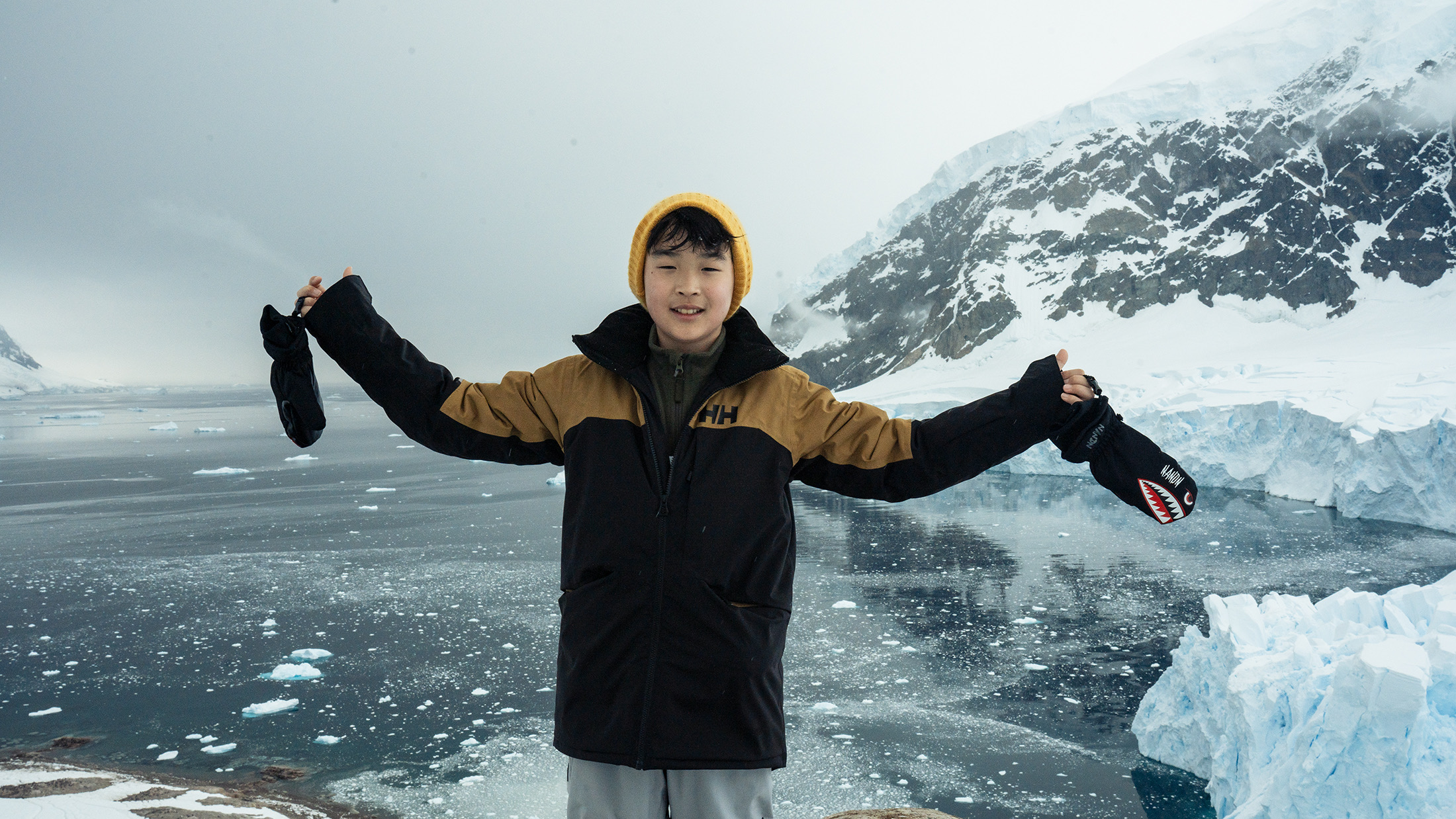
In December 2024, my parents organized a family trip to Antarctica.
It was an extraordinary journey and my first time experiencing a place so completely different from the world I was used to. The flights, the ships, the glaciers, the ocean, and the seemingly endless white landscape all became part of my most vivid memories of Antarctica.
My first impression when I arrived was simple—it was incredibly cold.
The wind was strong and carried a sharp, biting chill. Even with layers of warm clothing, I could still feel the Antarctic cold cutting through the air whenever I stood outside.
And yet, in the middle of this freezing environment, I decided to do something that still feels a little unbelievable when I think about it today: I took the Polar Plunge.
The moment I jumped into the water, the icy ocean surrounded my entire body. It went far beyond what I normally understood as “cold”—it was an intense and immediate physical sensation. The experience lasted only a short time, but it became one of the most unforgettable moments of the entire journey.
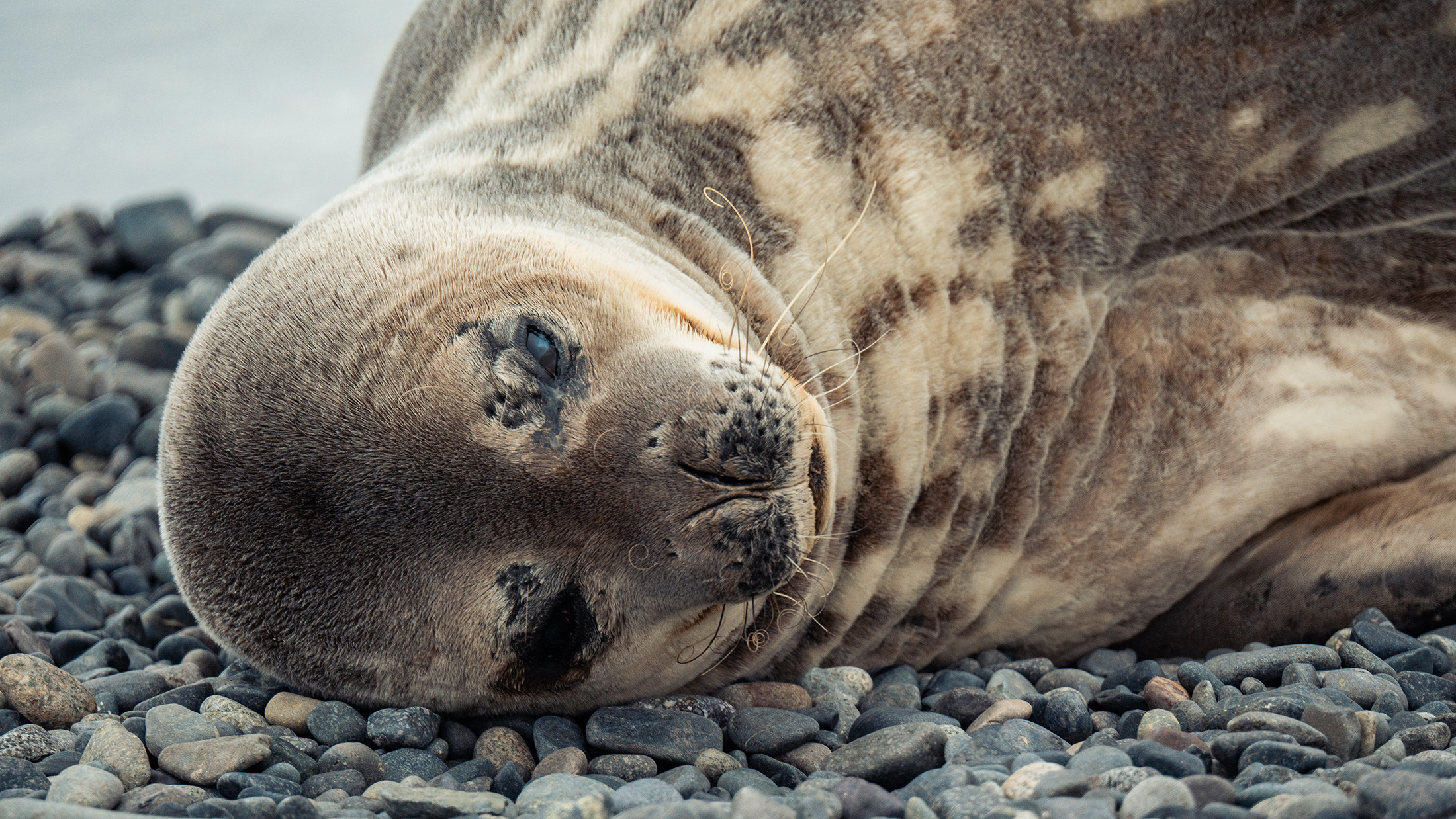
During the trip, we saw penguins and seals.
Before visiting Antarctica, I had mostly seen these animals in documentaries, photographs, and books. Seeing them in person was completely different. They were right there in front of us, living naturally among the ice, rocks, and ocean.
We visited Antarctica in December, during the Southern Hemisphere’s summer. In the region we traveled through, the days were extraordinarily long, and it never seemed to become truly dark.
Even at a time when night would normally have fallen, the sky remained bright.
Experiencing a place where darkness never seemed to arrive was fascinating. In everyday life, we naturally use sunrise and sunset to mark the beginning and end of each day. In Antarctica, that familiar sense of time seemed to disappear.
There was another moment that left a particularly strong impression on me.
During one of our landings, I saw the remains of a whale lying on the ground.
The area where we landed had almost no soil or lush vegetation. Instead, the landscape was made up of exposed rocks, ice, snow, and the surrounding ocean. The whale bones rested quietly among this vast and barren scenery.
It was in that moment that I truly began to understand how wild, untouched, and immense Antarctica really is.
There are no cities, no traffic, and almost none of the familiar sights of everyday life. There is only the wind, the ocean, the rocks, the ice, and the wildlife that calls this place home.
Standing in a landscape like this makes you realize how much larger the world is than the small part of it we experience every day—and how small we are within it.
Looking back, what I remember most about this journey is not simply how cold Antarctica was, how strong the wind felt, or how many penguins I saw.
What stays with me most is the memory of my family traveling such a long distance together to reach a place that truly felt like the edge of the world.
I saw the ice and the ocean, experienced the endless Antarctic daylight, and even jumped into its freezing waters.
Arctic expedition
Above the ice · 100 metres belowIf Antarctica left me with memories of ice, penguins, and extreme cold, the Arctic felt more like a true expedition into the unknown.
During this journey, I had the opportunity to experience things that are almost impossible to encounter in everyday life. One of the most extraordinary was descending approximately 100 metres beneath the Arctic Ocean in a submarine.
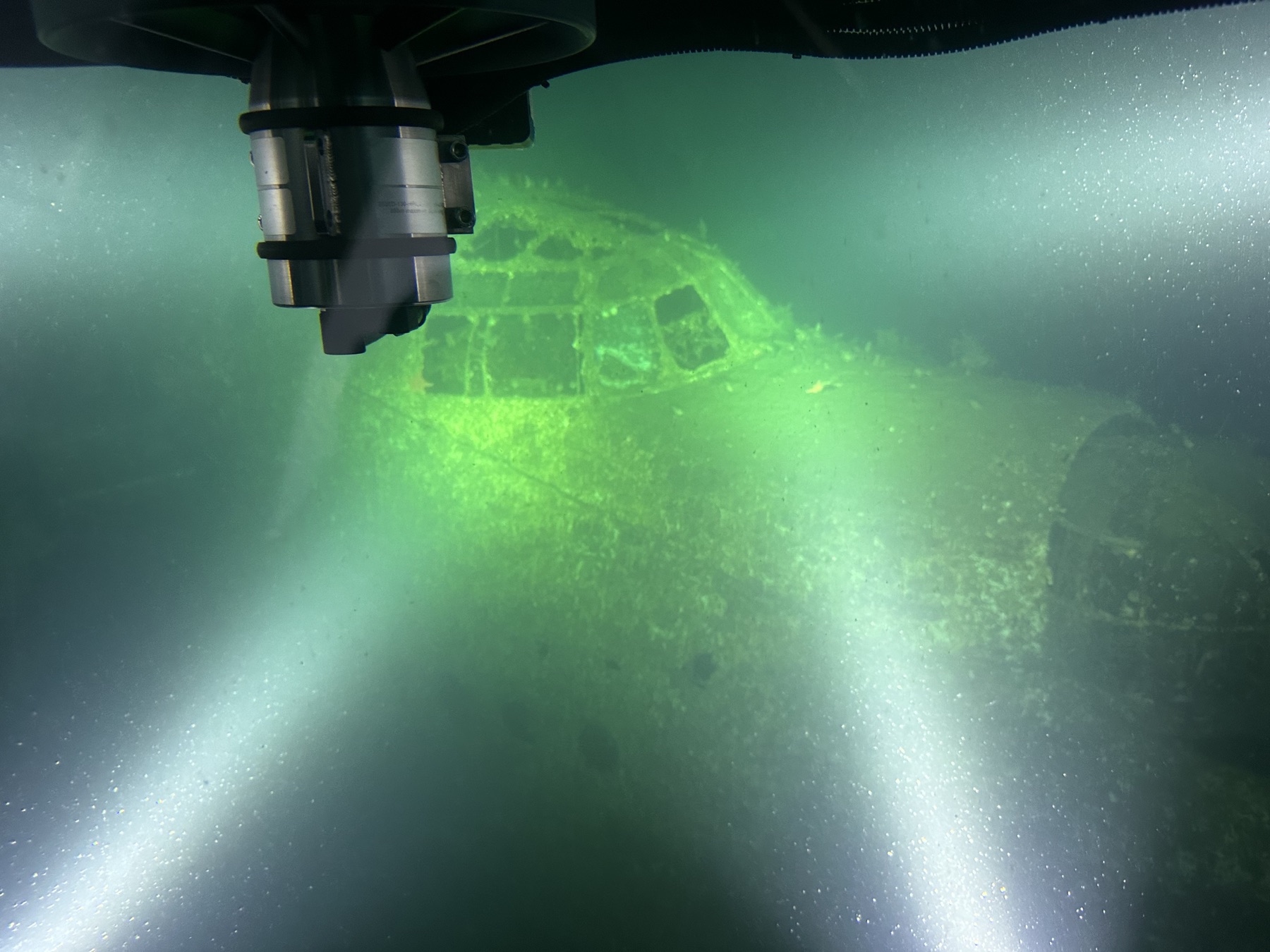
Simply entering the submarine was already a unique experience.
As we slowly descended beneath the surface, the light from above gradually disappeared and the world outside became darker, quieter, and more mysterious. Eventually, we reached a depth of around 100 metres.
At that moment, I became very aware that I had entered a completely different world.
Above us was the vast, freezing Arctic Ocean, while we were inside a small submarine exploring a part of the planet that very few people ever have the opportunity to see with their own eyes.
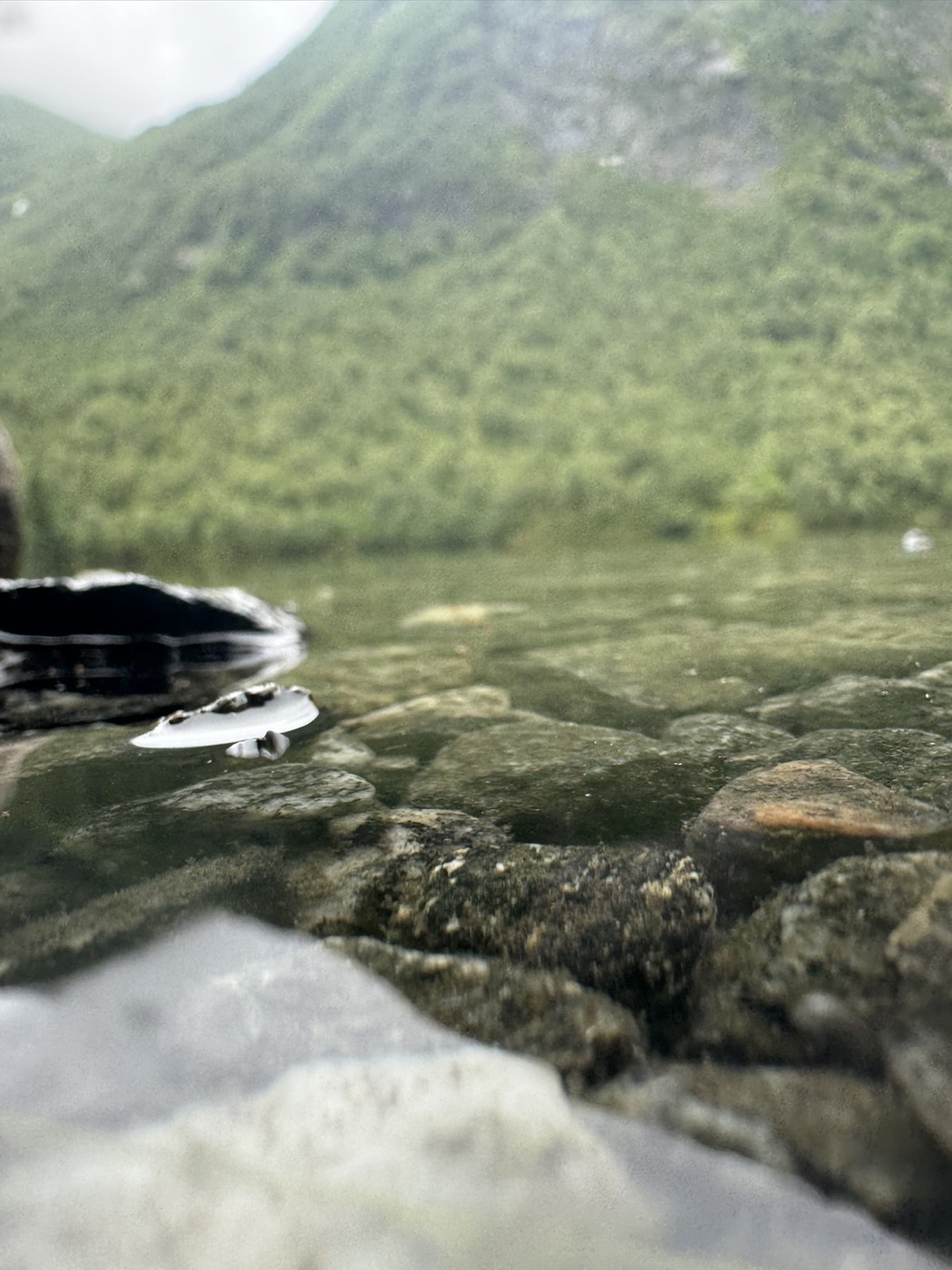
Seeing the Arctic from the surface and experiencing it from 100 metres underwater were completely different.
Above the ocean, the Arctic felt vast, bright, windy, and covered in ice. Beneath the surface, however, everything became incredibly quiet and mysterious, creating a strange feeling of being completely separated from the world above.
Descending 100 metres beneath the Arctic Ocean was one of the most unusual and unforgettable experiences of my entire Arctic journey.
But the submarine was not the only way I experienced the Arctic from a different perspective.
I also had the opportunity to fly over the Arctic by helicopter.
As the helicopter climbed higher, the enormous ice formations, ocean, and ship below gradually became smaller.
From the air, the Arctic revealed an entirely different landscape.
Huge sheets of sea ice stretched across the dark ocean, separated by natural cracks, channels, and patterns that were almost impossible to appreciate from ground level. From above, the enormous scale of the landscape became much easier to understand.
Looking down from the helicopter, I realized just how vast the Arctic truly is. It is a feeling that photographs can capture only partially.
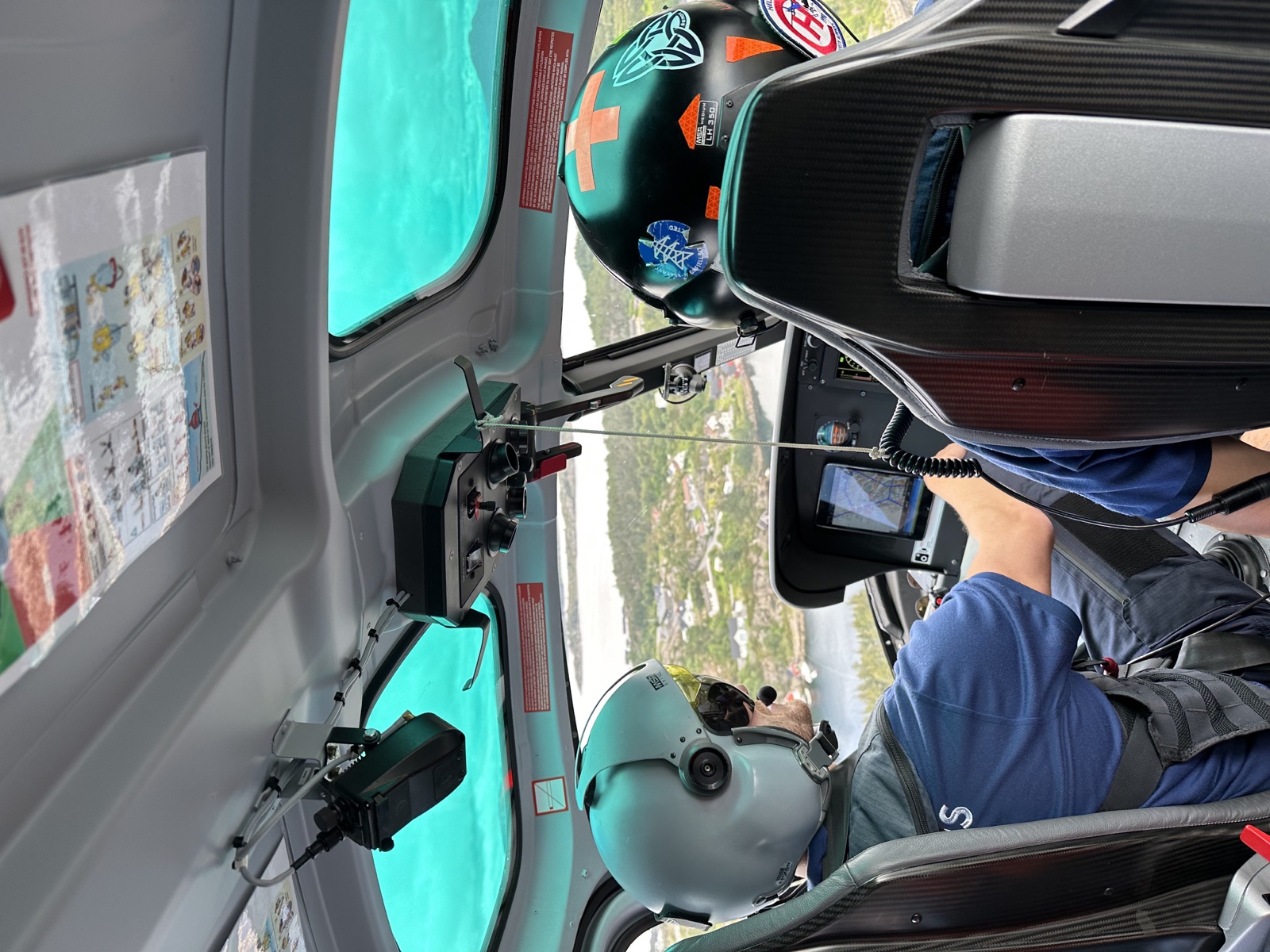
On one part of the journey, I was looking down at the Arctic from the sky. On another, I was traveling 100 metres beneath its ocean.
One journey took me upward. The other took me deep below the surface.
Through these two completely different perspectives, I was able to experience the same Arctic in two extraordinary ways. For me, that is what made this journey so memorable.
Travel is not always simply about reaching a destination. Sometimes, what stays with us are the moments that would almost never happen in ordinary life—entering a submarine and descending into the cold Arctic Ocean, or boarding a helicopter and seeing an endless world of ice from above.